Inference Acceleration · Speculative Sampling
SAG uses speculative sampling to accelerate action generation, a major bottleneck in WAM inference, without additional training or auxiliary models.
Action generation speedup
on LIBERO
Action generation speedup
on RoboTwin 2.0
No additional training
or auxiliary models
SAG-Residual
SAG-Coupling
§ 1 · Real-World Demos
The video could not be loaded. Select another task or reload the page.
§ 2 · Observation
Visual processing + VAE encoding + other stages
Action time saved (vs. baseline action)Values: action / total latency (ms)
Visual processing + VAE encoding + other stages
Action time saved (vs. baseline action)Values: action / total latency (ms)
Visual processing + VAE encoding + other stages
Action time saved (vs. baseline action)Values: action / total latency (ms)
Visual processing + VAE encoding + other stages
Action time saved (vs. baseline action)Values: action / total latency (ms)
§ 3 · Method
 View larger
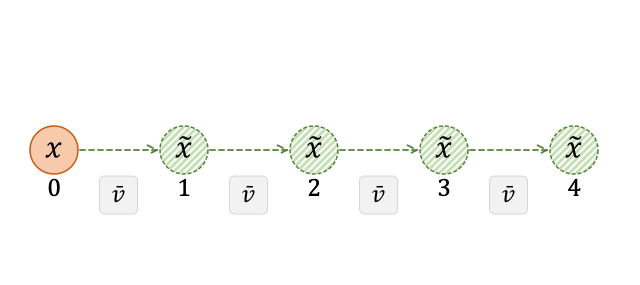
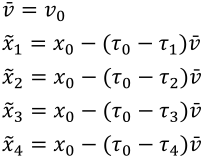
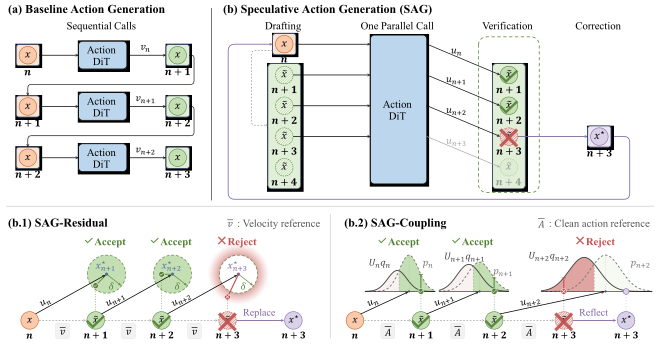
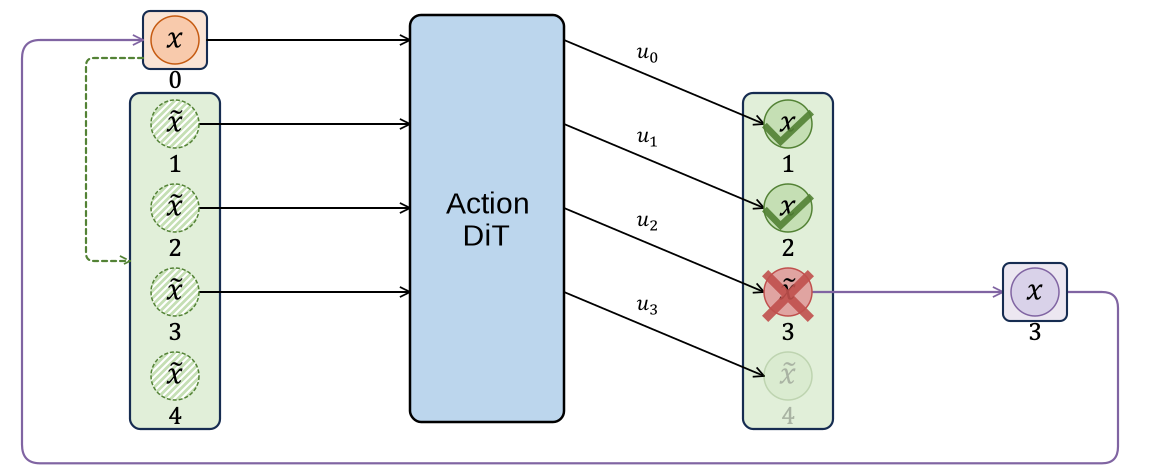
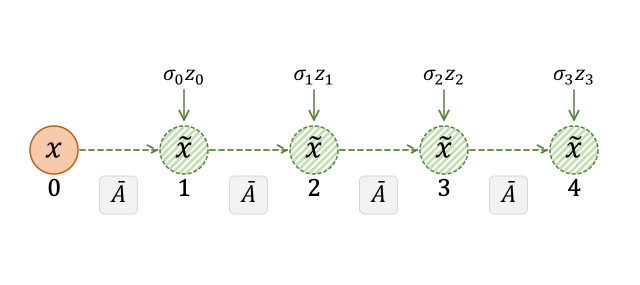
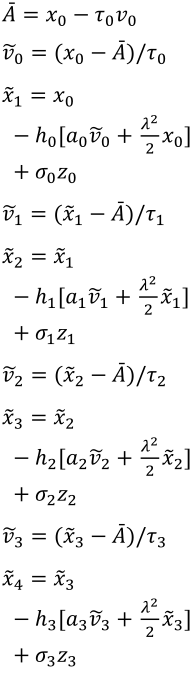
Generate multiple draft states through simple mathematical computations using a reference from the action model.
Obtain the velocity predictions needed for verification in one batched action DiT call.
Accept drafts in order. At the first rejection, correct that draft, discard subsequent drafts, and restart drafting from the corrected state.
The baseline generates actions through sequential denoising, with each DiT call depending on the state produced by the preceding update. In this example, ten integration steps require ten DiT calls in total.

SAG generates draft states at low computational cost and verifies them in one batched DiT call, enabling multiple integration steps per call. In this example, ten integration steps require four DiT calls in total.
and denote single-state and batched DiT call latencies, respectively, with .
§ 4 · Algorithms
§ 5 · Results
| Success rate (%) ↑ | Action latency | Overall latency | |||||||
|---|---|---|---|---|---|---|---|---|---|
| Method | Spatial | Object | Goal | Long | Avg. | ms ↓ | Speedup ↑ | ms ↓ | Speedup ↑ |
| 98.2 | 98.6 | 97.2 | 92.4 | 96.60 | 140.04 | 1.00× | 175.18 | 1.00× | |
| + SAG-Residual | 99.2 | 98.0 | 97.0 | 92.2 | 96.60 | 63.34 | 2.21× | 98.86 | 1.77× |
| + SAG-Coupling | 98.6 | 97.8 | 96.8 | 94.6 | 96.95 | 94.40 | 1.48× | 129.72 | 1.35× |
| Fast-WAM | 97.2 | 99.6 | 95.4 | 94.6 | 96.70 | 282.88 | 1.00× | 317.36 | 1.00× |
| + SAG-Residual | 97.8 | 99.8 | 96.0 | 94.6 | 97.05 | 127.17 | 2.22× | 165.13 | 1.92× |
| + SAG-Coupling | 97.6 | 99.4 | 96.2 | 94.2 | 96.85 | 139.85 | 2.02× | 175.60 | 1.81× |
| Faster-WAM | 99.4 | 99.6 | 98.2 | 98.2 | 98.85 | 204.88 | 1.00× | 251.44 | 1.00× |
| + SAG-Residual | 99.0 | 99.8 | 98.0 | 99.0 | 98.95 | 101.38 | 2.02× | 148.11 | 1.70× |
| + SAG-Coupling | 98.6 | 99.8 | 99.2 | 97.8 | 98.85 | 108.56 | 1.89× | 157.23 | 1.60× |
| Success rate (%) ↑ | Action latency | Overall latency | ||||||||||
|---|---|---|---|---|---|---|---|---|---|---|---|---|
| Method | Cam. | Robot | Lang. | Light | Backg. | Noise | Layout | Avg. | ms ↓ | Speedup ↑ | ms ↓ | Speedup ↑ |
| 65.83 | 82.32 | 86.48 | 96.30 | 94.59 | 84.05 | 85.45 | 84.13 | 139.03 | 1.00× | 174.41 | 1.00× | |
| + SAG-Residual | 68.75 | 78.79 | 86.48 | 97.53 | 98.38 | 84.82 | 85.45 | 84.86 | 59.72 | 2.33× | 93.89 | 1.86× |
| + SAG-Coupling | 65.83 | 80.30 | 87.70 | 98.77 | 94.05 | 83.27 | 85.45 | 84.13 | 82.47 | 1.69× | 119.12 | 1.46× |
| Fast-WAM | 16.25 | 41.92 | 72.13 | 84.57 | 47.57 | 33.07 | 60.00 | 49.14 | 280.83 | 1.00× | 315.14 | 1.00× |
| + SAG-Residual | 17.08 | 44.44 | 72.95 | 83.33 | 48.11 | 33.85 | 58.64 | 49.60 | 126.90 | 2.21× | 165.05 | 1.91× |
| + SAG-Coupling | 17.08 | 44.95 | 73.77 | 82.72 | 46.49 | 32.68 | 62.73 | 49.93 | 141.20 | 1.99× | 177.17 | 1.78× |
| Faster-WAM | 54.58 | 68.69 | 95.08 | 95.68 | 58.38 | 63.81 | 83.18 | 73.64 | 205.74 | 1.00× | 260.53 | 1.00× |
| + SAG-Residual | 54.17 | 70.71 | 95.49 | 95.06 | 58.38 | 62.26 | 80.45 | 73.17 | 118.57 | 1.74× | 165.75 | 1.57× |
| + SAG-Coupling | 53.75 | 69.19 | 95.49 | 94.44 | 58.92 | 63.81 | 83.18 | 73.57 | 110.01 | 1.87× | 159.50 | 1.63× |
| Success rate (%) ↑ | Action latency | Overall latency | |||||
|---|---|---|---|---|---|---|---|
| Method | Clean | Randomized | Avg. | ms ↓ | Speedup ↑ | ms ↓ | Speedup ↑ |
| 45.14 | 47.86 | 46.50 | 186.14 | 1.00× | 242.54 | 1.00× | |
| + SAG-Residual | 51.18 | 56.22 | 53.70 | 65.16 | 2.86× | 122.25 | 1.98× |
| + SAG-Coupling | 44.30 | 46.92 | 45.61 | 133.68 | 1.39× | 190.23 | 1.27× |
| Fast-WAM | 90.84 | 89.98 | 90.41 | 428.95 | 1.00× | 481.69 | 1.00× |
| + SAG-Residual | 90.76 | 89.98 | 90.37 | 132.53 | 3.24× | 185.47 | 2.60× |
| + SAG-Coupling | 90.42 | 89.08 | 89.75 | 201.13 | 2.13× | 251.51 | 1.92× |
| Faster-WAM | 90.82 | 90.88 | 90.85 | 286.41 | 1.00× | 346.86 | 1.00× |
| + SAG-Residual | 91.36 | 91.22 | 91.29 | 87.52 | 3.27× | 148.19 | 2.34× |
| + SAG-Coupling | 90.92 | 90.40 | 90.66 | 120.37 | 2.38× | 180.37 | 1.92× |
| Fast-WAM | Faster-WAM | ||||||
|---|---|---|---|---|---|---|---|
| Method | K | SR | Action | SR | Action | SR | Action |
| Serial Euler | 20 | 99.0 | 294.86 | 97.2 | 567.59 | 98.8 | 396.87 |
| 10 | 98.2 | 150.82 | 97.2 | 280.30 | 99.4 | 205.33 | |
| 5 | 97.8 | 80.97 | 97.0 | 138.33 | 98.4 | 99.87 | |
| + SAG-Residual | 20 | 99.2 | 101.22 | 97.4 | 198.19 | 98.6 | 185.38 |
| 10 | 99.2 | 69.53 | 97.8 | 125.30 | 99.0 | 135.32 | |
| 5 | 98.4 | 50.23 | 97.2 | 86.59 | 98.6 | 81.48 | |
| + SAG-Coupling | 20 | 98.0 | 187.82 | 97.6 | 204.99 | 99.0 | 201.21 |
| 10 | 98.6 | 105.91 | 97.6 | 132.60 | 98.6 | 120.81 | |
| 5 | 98.4 | 71.99 | 97.6 | 99.19 | 99.2 | 72.51 | |
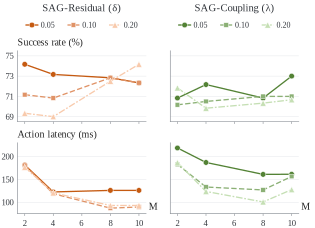 Click to enlarge
@misc{xiu2026speculative,
  title  = {Speculative Action Generation for World Action Models},
  author = {Xiu, Lingkun and Wang, Xiaobo and Wei, Bingwen and Zhao, Ruoyu and Ning, Jiahong and Li, Maoqing and Wan, Renquan and Zhang, Xiao-Ping and Yu, Jincheng and Chen, Xinlei},
  year   = {2026},
  note   = {Manuscript}
}